
X
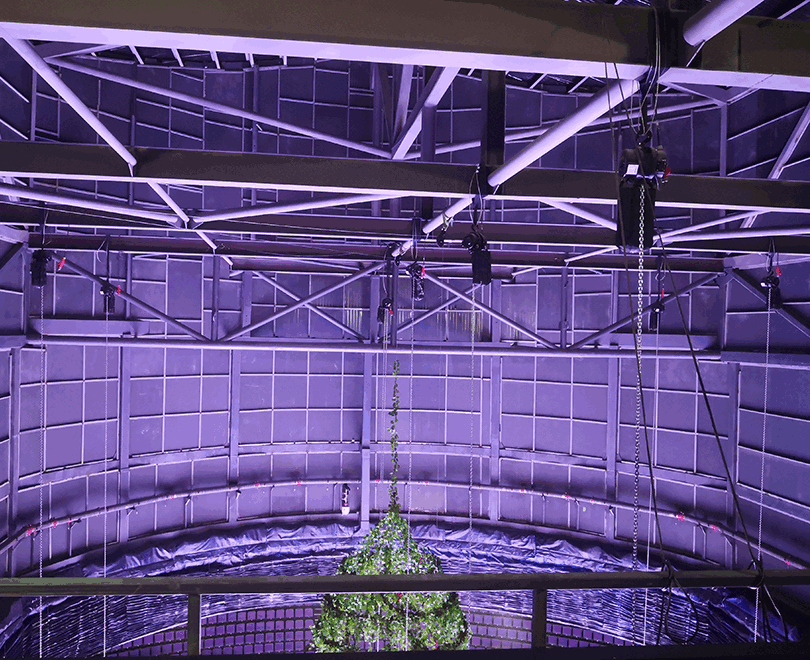
Electric hoists represent their own machinery, strength, and toughness, while the stage is elegant, flowing, and soft, with conflicts and collisions between the two.
During the installation and construction process of the stage electric hoist, attention should be paid to selecting the appropriate installation location, inspecting equipment and accessories, corre
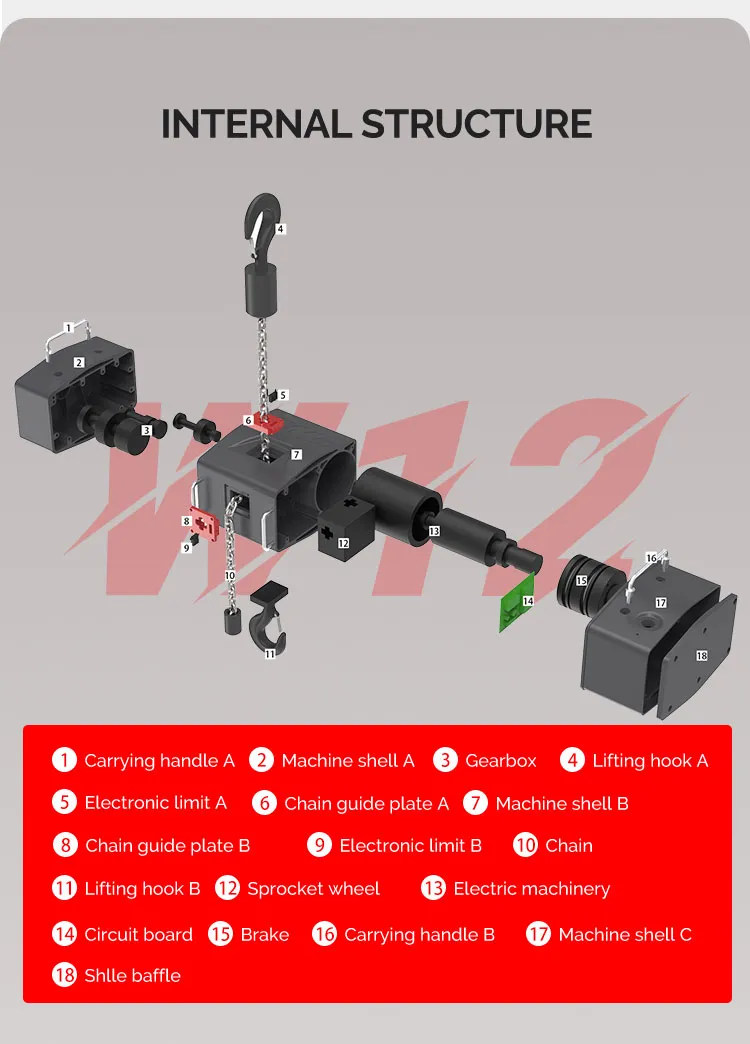
Category : W12 Stage Electric Hoist
Get a Quote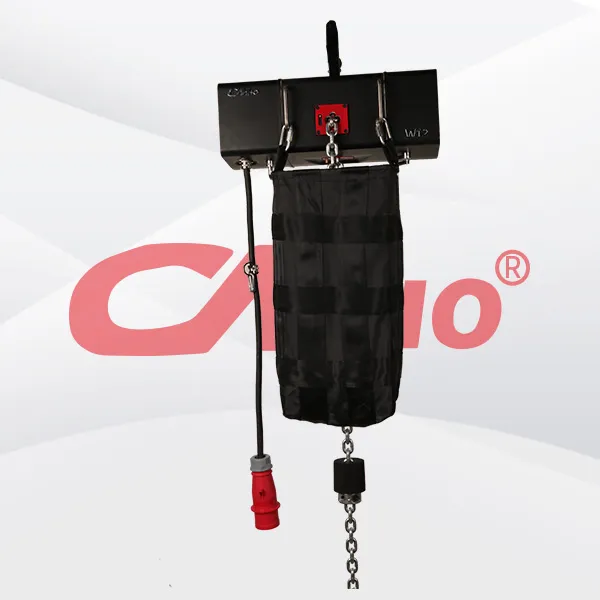
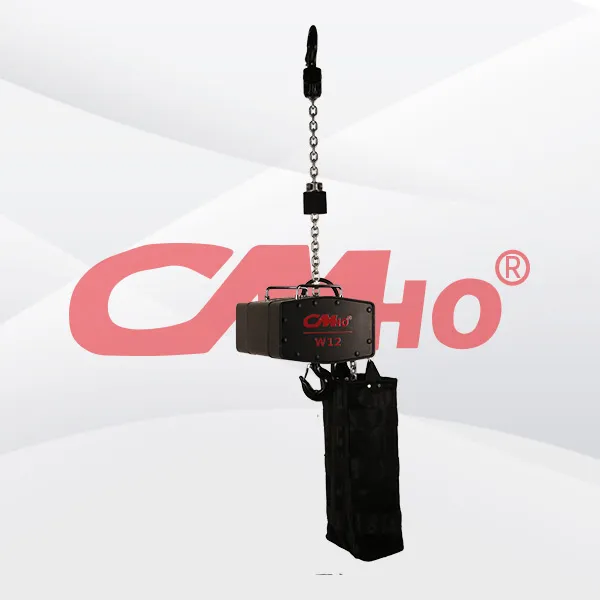
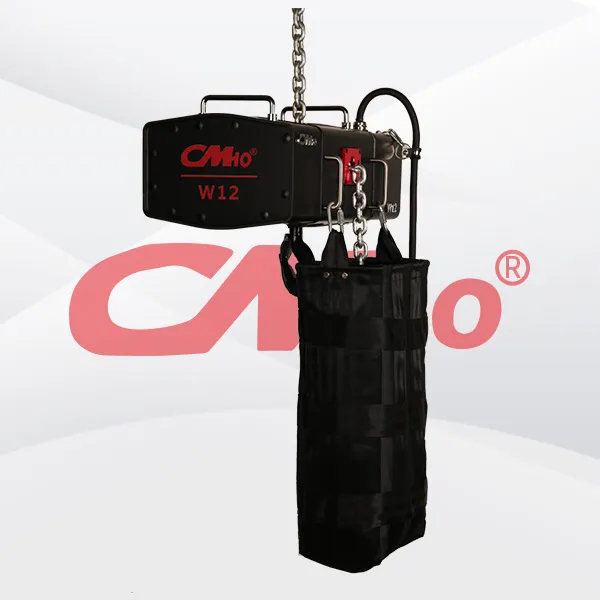
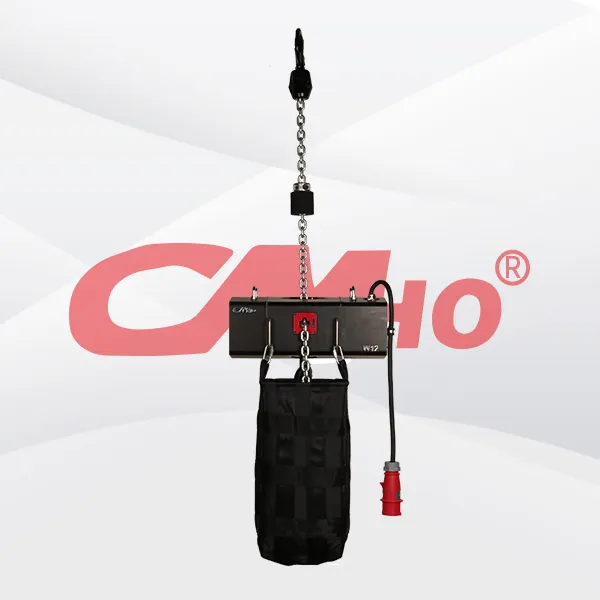

Product Details
Precautions for installation and construction of stage electric hoist (II)
4、 Debugging and testing equipment
(1) Perform no-load debugging: After installation, perform no-load debugging. Connect the power supply and operate the controller of the stage electric hoist to enable the equipment to run without load. Check whether the motor runs smoothly and has no abnormal noise; Whether the transmission of the chain is smooth and free of jamming; Is the limit switch sensitive and reliable.
(2) Perform load debugging: After the no-load debugging is normal, perform load debugging. Gradually increase the load weight and observe the operation of the stage electric hoist. Check whether the lifting speed, descending speed, braking performance, etc. of the equipment under load conditions meet the requirements. At the same time, pay attention to observing whether the temperature of the motor is normal and whether there is any overheating phenomenon.
(3) Conduct security testing: During the debugging process, security testing should be conducted. Simulate various fault situations, such as overload, limit failure, power outage, etc., and check whether the safety devices can act in a timely manner to protect the safety of equipment and operators.
5、 Train operators
(1) Operators should possess relevant qualifications: Operators of stage electric hoists should have corresponding qualifications and skills, such as crane operation certificates. Before using the equipment, the operators should be trained and assessed to ensure that they are proficient in the operation methods and safety precautions of the equipment.
(2) The training content includes operation methods and safety knowledge: the training content should include the operation methods, safety precautions, troubleshooting methods, etc. of the stage electric hoist. Operators should be familiar with the operation methods of various functional buttons and controllers of the equipment, understand the safety performance and operating procedures of the equipment, and master the troubleshooting methods of common faults.
(3) Regular retraining and assessment: In order to ensure the skill level and safety awareness of operators, regular retraining and assessment should be conducted for them. The content of retraining should include new safety regulations, operating procedures, and technical knowledge. The assessment content should include theoretical knowledge and practical operational skills. Operators who fail the assessment should receive retraining.
6、 Maintenance and upkeep of equipment
(1) Regular maintenance: Stage electric hoists should be regularly maintained to ensure their performance and safety. The maintenance content includes cleaning equipment, checking the wear and tear of components, replacing lubricating oil, inspecting electrical systems, etc. Follow the maintenance manual of the equipment to ensure the quality and effectiveness of maintenance work.
(2) Timely handling of faults and problems: If any faults or problems are found in the stage electric hoist during use, they should be dealt with in a timely manner. To analyze and judge based on the fault phenomenon, identify the cause of the fault, and take corresponding maintenance measures. During the repair process, it is necessary to use accessories and tools that meet the requirements to ensure the quality of the repair.
(3) Proper storage and preservation of equipment: When not using the stage electric hoist, it is necessary to properly store and preserve the equipment. Store the equipment in a dry, ventilated, and safe place, avoiding direct sunlight and humid environments. Regularly inspect and maintain the equipment to ensure its performance and safety during storage.
RELATED PRODUCTS .
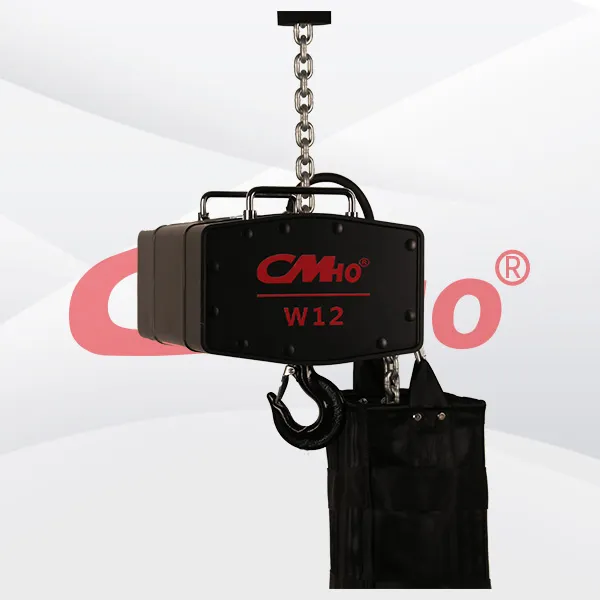
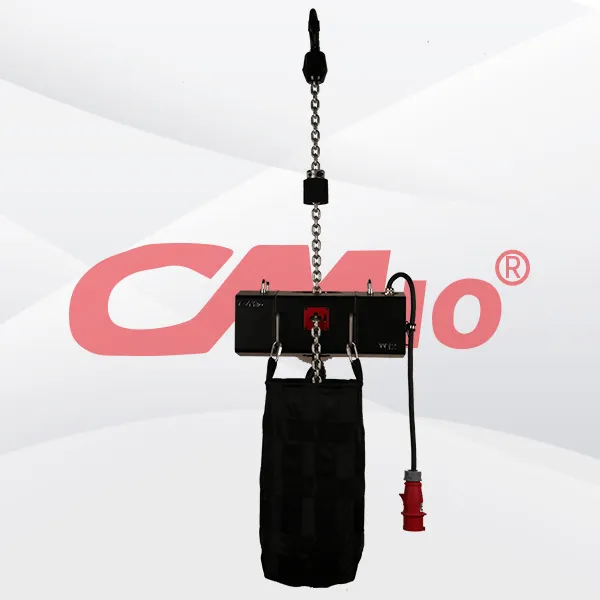
Our G100 stage lifting hoist features Grade100 high-strength alloy chain, excellent tensile strength, dual brake and IP66 waterproof for safe stage rigging.
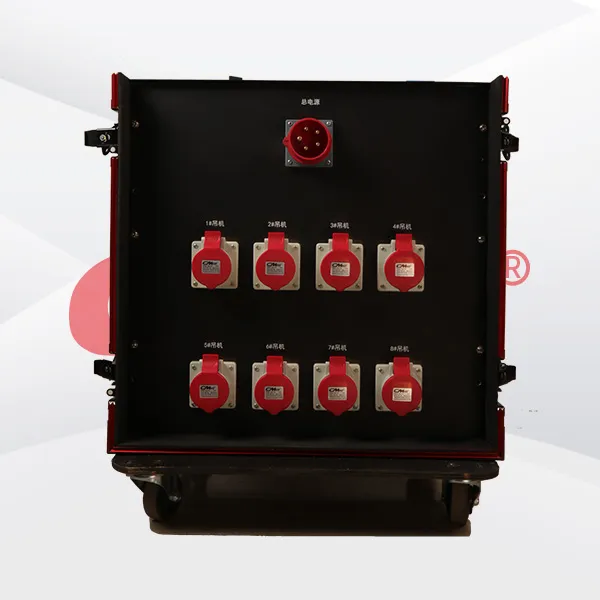
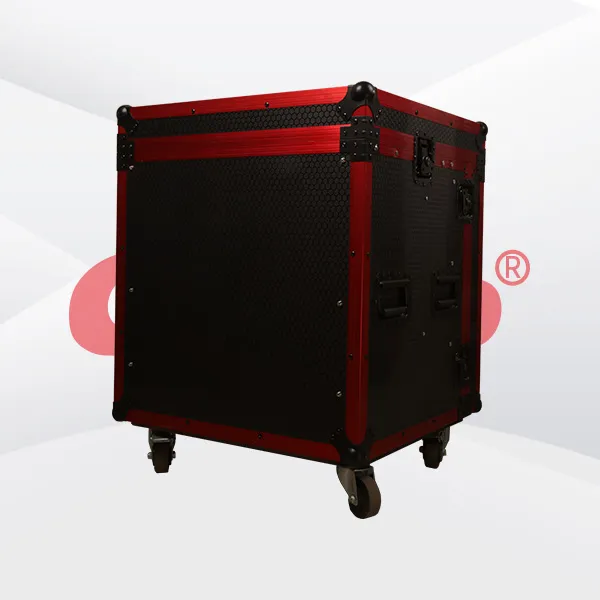
A dedicated electrical control enclosure for stage electric chain hoists. It serves as the operation hub to control hoist lifting, lowering and stopping, with built-in safety protections. It supports
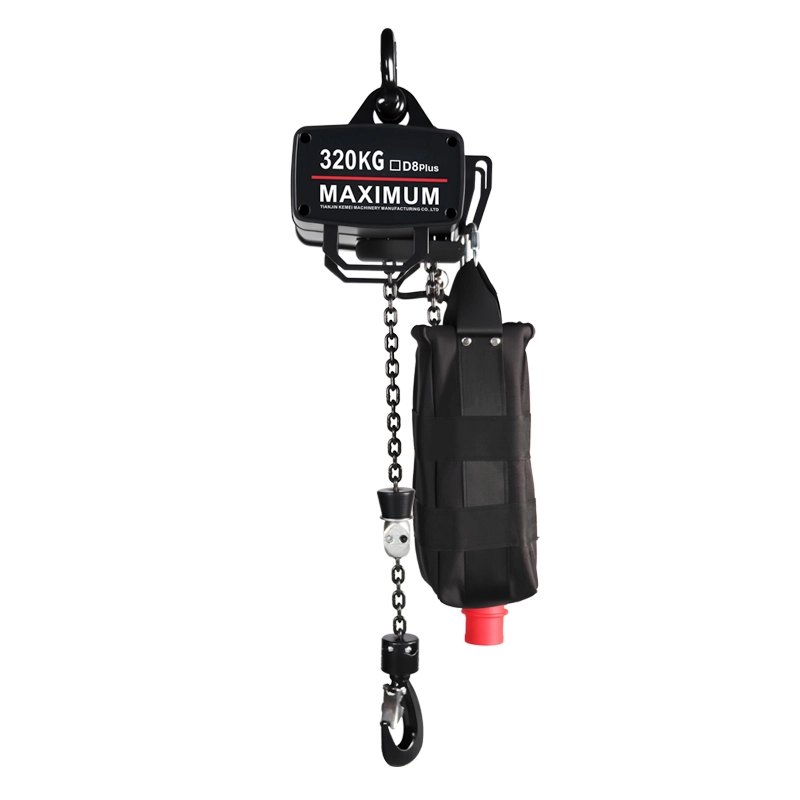
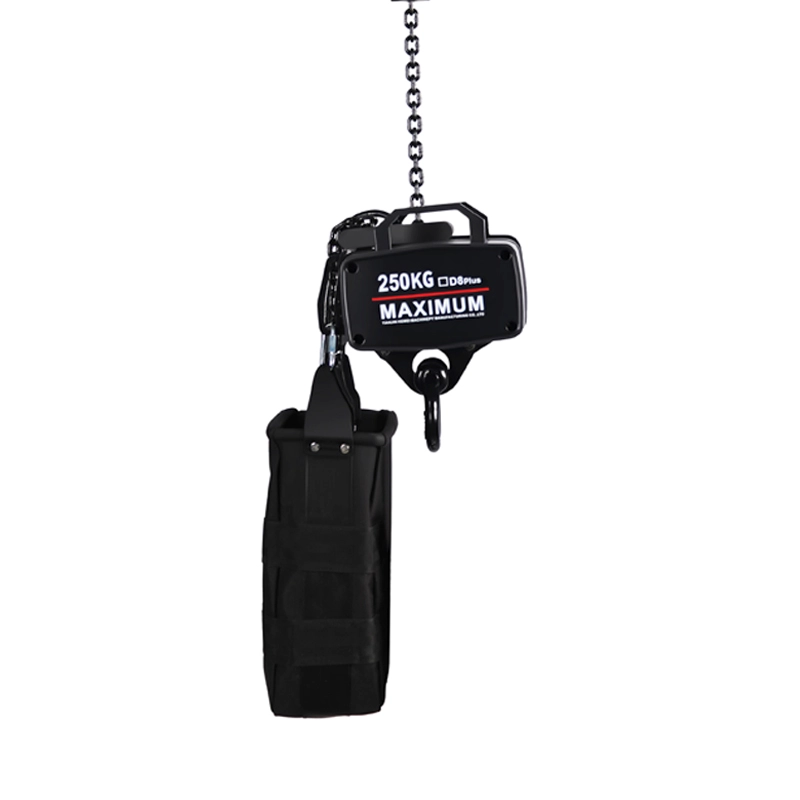
A cross-shaped chain outlet stage hoist is specialized entertainment rigging lifting equipment for live events, theatres and concerts. Its distinctive cross-shaped chain outlet guides load chain smoot


High‑quality stage lifting sling is essential equipment for concert, theatre and live‑event rigging. Made of heavy‑duty polyester webbing, these rigging slings deliver stable load‑bearing performance

2026-09-16
创始人
0
PLASE SHOW Vietnam Professional Lighting Sound Exh...
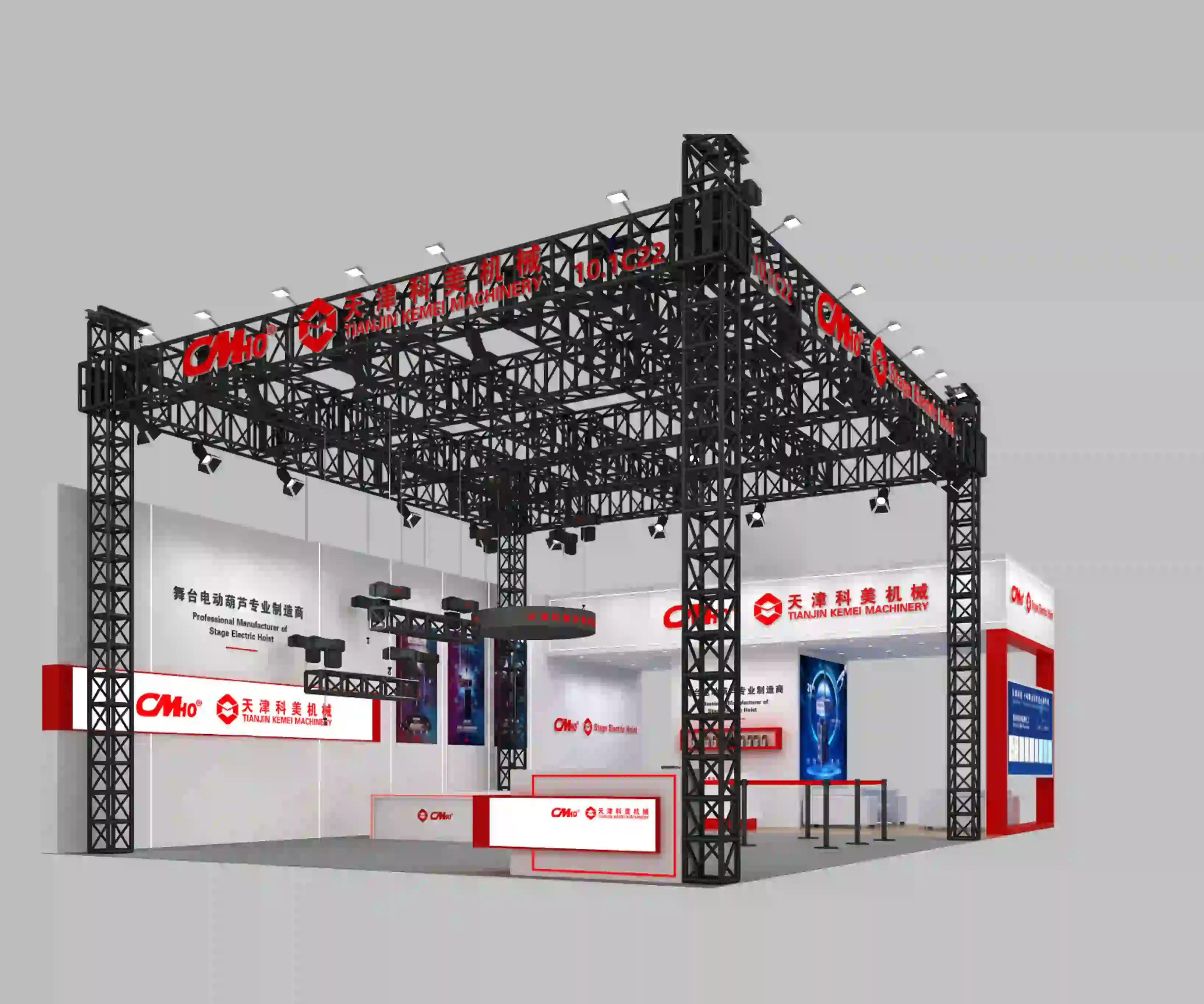
Tianjin Kemei Machinery Manufacturing Co., Ltd is honored to participate in PLASE SHOW Vietnam, the most influential professional exhibition for stage lighting, audio and ri...
2026-05-14
创始人
0
2026 Prolight Sound
Prolight + Sound Guangzhou 2026 will grandly kick off from May 28 to 31! We sincerely invite all new and old customers to visit our booth for inspection and business negotia...
2026-04-27
admin
0
The Invisible Cloak of Stage Electric Hull
The stage electric hoist is a commonly used lifting tool when building a stage. It has a compact appearance and is easy to use
2026-03-18
创始人
0
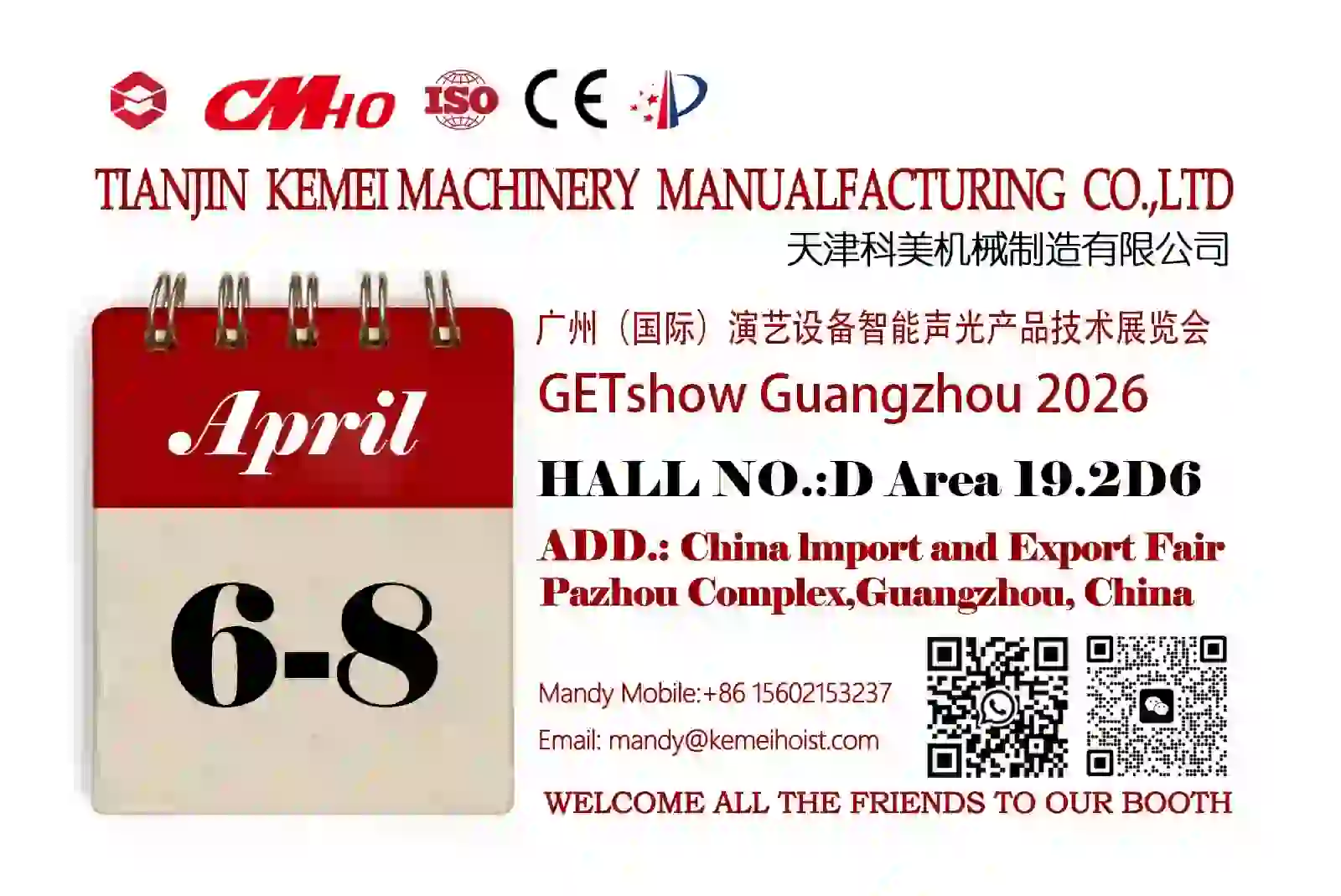
2026 GET SHOW
Our company will make a major appearance at the GETshow Guangzhou (International) Performing Arts Equipment, Intelligent Acoustic and Optical Equipment Technology Exhibition...